
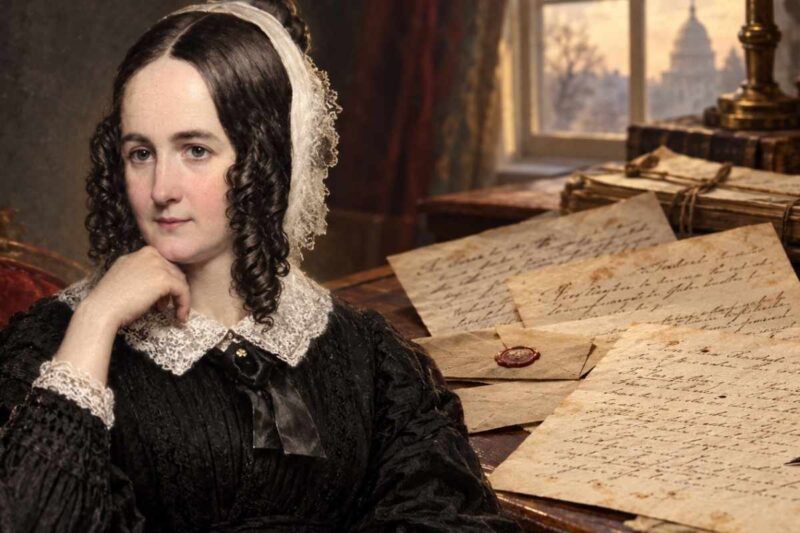
Getting a holiday on the national calendar wasn’t easy in the 1800s.
Sarah Josepha Hale spent 17 years campaigning for a national Thanksgiving celebration, writing to five presidents along the way.
Four failed to give her the answer she wanted.
Number five was Abraham Lincoln, who had a Civil War to manage and apparently still found time to consider her suggestion.
Americans already celebrated Thanksgiving, but getting everyone to observe it on the same day was another matter entirely.
It’s one of those weird history stories that sounds made up but really happened, involving years of persistence before a familiar American tradition became official.
Who Was Sarah Josepha Hale?
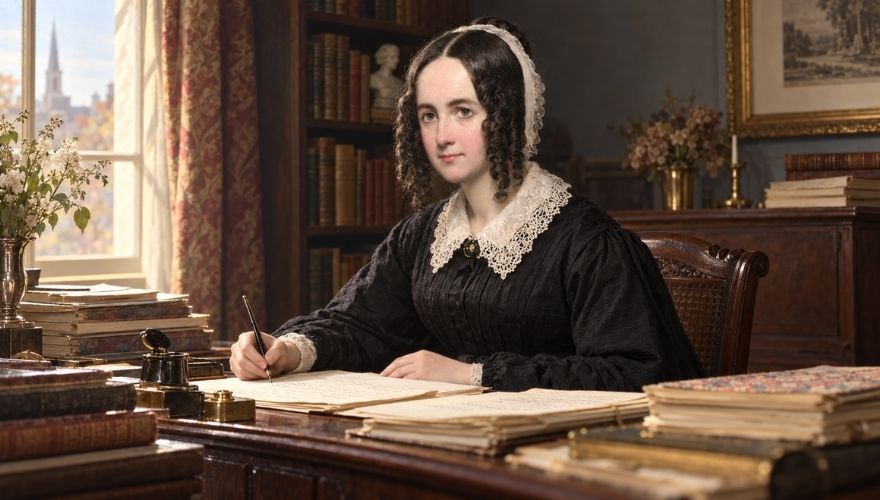
Born in Newport, New Hampshire, in 1788, Sarah Josepha Hale became a writer after her husband’s death left her raising five children.
Her literary accomplishments included writing the nursery rhyme “Mary Had a Little Lamb.”
However, her influence reached considerably further than children’s poetry.
As editor of Godey’s Lady’s Book, one of America’s most influential women’s magazines, Hale could reach households across the country.
She used editorials, recipes, and stories about family gatherings to encourage Thanksgiving celebrations.
Her interest wasn’t new, either. Hale had promoted Thanksgiving traditions in her 1827 novel Northwood, years before her organized political campaign began.
Hale was already publishing arguments for a national Thanksgiving in 1827.
By the time Lincoln acted in 1863, she had been promoting the idea for roughly 36 years, although her organized letter-writing campaign began in 1846. Some people lose interest in a project after a few months. Hale apparently preferred decades.
Putting an idea into people’s homes was one thing. Getting Washington to cooperate required considerably more patience.
Seventeen Years, Five Presidents, and Plenty of Unanswered Letters
In 1846, Sarah Josepha Hale began campaigning in earnest for an annual national Thanksgiving celebration.
Her correspondence eventually reached numerous U.S. Presidents:
- Zachary Taylor
- Millard Fillmore
- Franklin Pierce
- James Buchanan
None established the national observance she wanted.
Federal authority was a sticking point. States had traditionally handled Thanksgiving proclamations, and some officials believed presidents had no business deciding their holiday calendars.
Religious differences and Thanksgiving’s strong New England associations complicated matters further.
Hale also contacted governors, diplomats, and other influential figures, trying to build support wherever she could find it.
Her campaign addressed a practical problem.
Some states celebrated Thanksgiving in November, others selected different dates, and some didn’t observe it at all.
By 1863, Hale had already tried four presidents. Washington proved far harder to organize than a Thanksgiving dinner.
The Letter That Finally Reached Abraham Lincoln
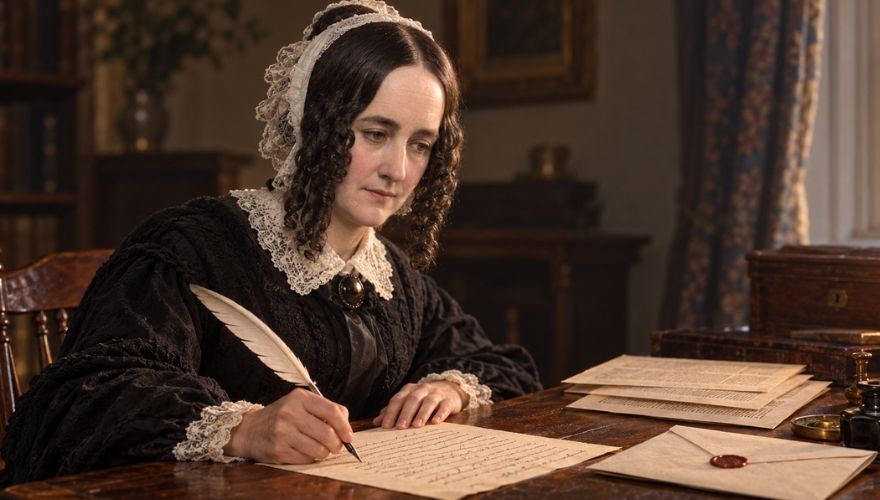
On September 28, 1863, Sarah Josepha Hale sent Lincoln a letter requesting a nationwide Thanksgiving observance on November’s last Thursday.
She enclosed three printed papers explaining her proposal and the support it had gathered. After years of asking, Hale wasn’t about to leave the president without something to read.
Her original letter, preserved in the Library of Congress, reveals something interesting.
Hale wasn’t merely asking Americans to eat together. She wanted a permanent national custom that could help unite a country torn apart by war.
She also understood the paperwork. Governors needed sufficient notice to issue their own proclamations, so presidential action had to come quickly.
Five days later, on October 3, Lincoln issued a proclamation calling for Thanksgiving on November 26, 1863.
Secretary of State William Seward drafted the proclamation, which addressed national blessings alongside the suffering caused by the Civil War.
Seventeen years of campaigning had produced a presidential response in just five days.
Sarah Josepha Hale’s Thanksgiving Legacy
Sarah Josepha Hale didn’t invent Thanksgiving. Americans had celebrated various Thanksgiving days for generations, including a national observance proclaimed by George Washington in 1789.
Her achievement was helping turn scattered customs into an enduring annual tradition.
Her role in shaping this American tradition is also explored in The Writer Who Gave Us Thanksgiving: Sarah Josepha Hale’s Story, a closer look at the woman whose persistence helped bring the holiday to the national calendar.
In 1939, Franklin D. Roosevelt moved Thanksgiving earlier to extend the Christmas shopping season.
Thirty-two states followed him, while 16 kept the traditional date. Nearly eight decades after Hale’s campaign succeeded, Americans were once again arguing over when to eat Thanksgiving dinner.
Lincoln issued the famous proclamation, but Sarah Josepha Hale had spent years making sure the idea stayed on somebody’s desk.
Every November, Americans continue a tradition she helped put on the calendar.