
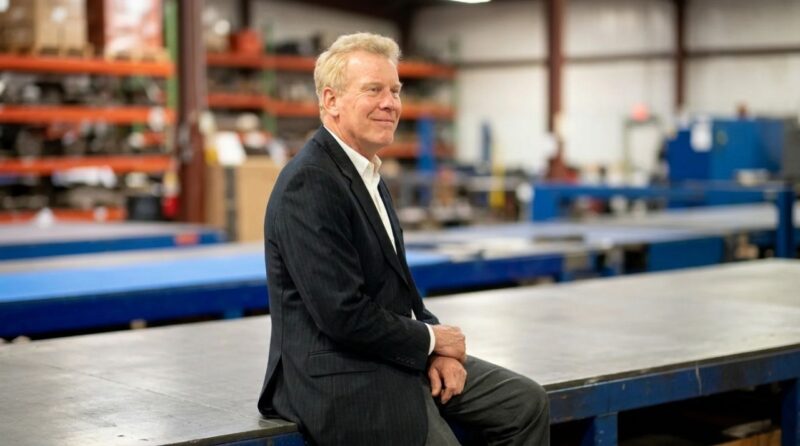
At one point, a competitor handed Bill Stockwell a signed check and invited him to fill in the amount. For a businessman approaching retirement, it was a remarkably efficient sales pitch. Stockwell declined.
Money wasn’t the only consideration. His family had operated Stockwell Elastomerics, a Philadelphia manufacturing company founded by his great-grandfather in 1919, for more than a century. Selling it would have been relatively straightforward.
Deciding what happened to the people who helped keep it operating was considerably more complicated.
A Century-Old Business and an Uncomfortable Decision
After 35 years as president and CEO, Stockwell began seriously considering succession around 2014, when he turned 60.
Business was healthy. Stockwell Elastomerics occupied three Philadelphia buildings, employed more than 100 workers, and manufactured custom silicone gaskets for customers across various industries.
Interested buyers weren’t difficult to find. Larger competitors, suppliers, private equity firms, and corporations had approached him over the years.
Yet an acquisition carried uncertainties that a purchase agreement couldn’t entirely settle. A new owner might relocate manufacturing, consolidate operations, or eliminate positions.
Stockwell also had personal financial considerations. Decades spent managing a successful company deserved some compensation.
Finding a buyer who valued its employees as much as its assets became the harder question.
Finding a Different Kind of Buyer
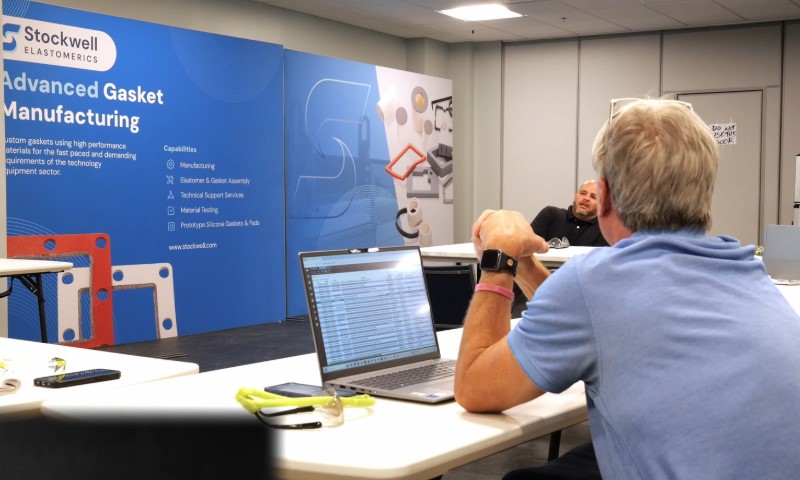
An encounter with Ken Baker of New Age Industries introduced Stockwell to an alternative: an employee stock ownership plan, or ESOP.
Employee ownership was hardly an untested idea, although it was unfamiliar to many workers at Stockwell Elastomerics.
By 2023, more than 15 million Americans participated in 6,525 ESOPs, according to federal labor data. Stockwell wasn’t inventing a new business structure. He was applying an established one to a company his family had controlled for generations.
Under an ESOP, a retirement trust holds company shares for eligible employees, allowing them to accumulate financial benefits tied to the business’s value. Unlike conventional individual stock purchases, employees generally earn their shares through the company’s retirement benefit arrangements.
As explained by the U.S. Department of Labor, an ESOP can hold part or all of a company, although employees don’t automatically gain direct control over everyday management decisions.
Stockwell investigated other employee-owned businesses before proceeding with a gradual transfer.
- 2017 – Employees acquired a 30% ownership stake.
- 2021 – Employee ownership increased to 45%.
- 2024: -Stockwell Elastomerics became 100% employee-owned.
Seven years separated the first transaction and full employee ownership. That measured approach allowed time to arrange financing, establish the ownership structure, and prepare employees.
It also addressed a concern that conventional succession plans sometimes overlook: protecting continuity without assuming that a new owner will share the previous owner’s priorities.
The Employees Who Made the Decision Matter
For Mike Sisco, a production engineering specialist with nearly four decades at Stockwell Elastomerics, the transition concerned a workplace he knew exceptionally well.
Employees like Sisco possessed years of practical manufacturing knowledge. Their experience helped sustain a business producing specialized components that demanded precision and consistency.
Yet many workers initially struggled to grasp the ESOP announcement. Employee ownership wasn’t a familiar concept, and explaining its financial implications required repeated conversations.
Workers knew how to manufacture the products. Discovering how they had become the company’s owners took additional explanation.
One important distinction concerned financial expectations. ESOP shares generally accumulate within retirement accounts, and their value depends partly on company performance. Ownership isn’t equivalent to an immediate cash payment.
Employees also face concentrated financial exposure when their retirement benefits depend heavily on the same company providing their wages.
What Stockwell Chose to Leave Behind
Stockwell eventually retired as president and CEO, although he continued contributing to engineering and production part-time.
His decision gave employees a financial stake in a business they had helped sustain, while supporting his hope that manufacturing jobs would stay in Philadelphia.
Employee ownership offers no permanent protection against economic difficulties, changing markets, or disappointing management decisions. Stockwell couldn’t predict what another generation might encounter.
Still, he spent seven years arranging an alternative to an outside sale.
He could have written almost any number on that signed check. Instead, he chose an arrangement whose full value may take another generation to calculate.