

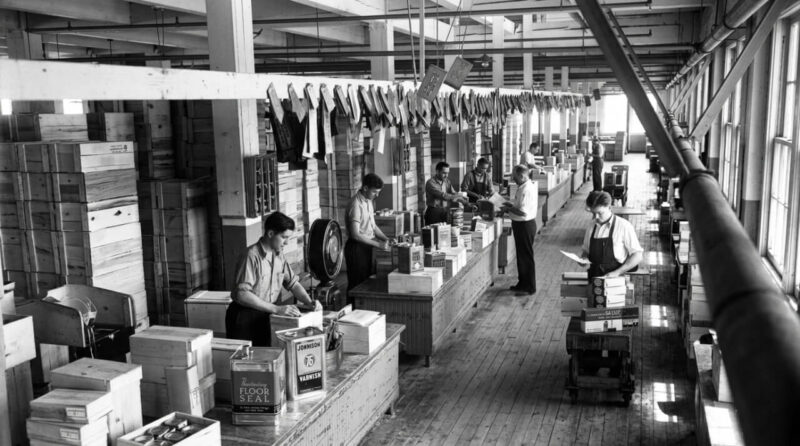
Some American businesses have survived for centuries, outlasting wars, economic crises, and technological changes. A few are still controlled by descendants of their founders, although the businesses themselves often look very different today.
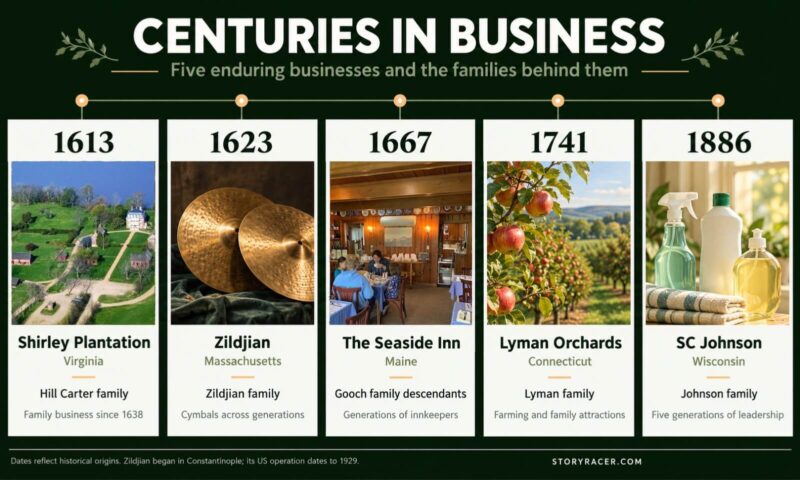
Among the oldest companies in the US, Shirley Plantation traces its history to 1613, while Zildjian began making cymbals in 1623, more than a century before establishing American manufacturing operations.
Lyman Orchards has operated since 1741, and SC Johnson has passed through five generations of family leadership.
An important distinction separates the oldest surviving businesses and the oldest continuously family-owned companies.
Founding dates do not always indicate when a particular family acquired ownership, and not every enterprise began on American soil.
Five companies demonstrate how families have protected their businesses through succession, changing markets, and sometimes difficult decisions about what deserves preservation.
1. Shirley Plantation (1613) – A Family Inheritance With a Complicated History
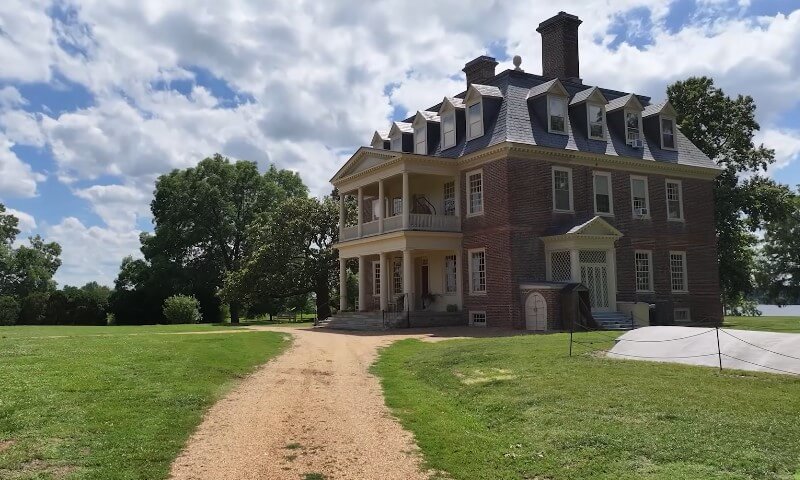
Shirley Plantation, established along Virginia’s James River in 1613, is among the country’s oldest surviving agricultural properties.
Edward Hill I began farming the property in 1638, establishing a connection that continued through the Hill and Carter families. Construction of the present manor house began around 1723, following the marriage of Elizabeth Hill and John Carter, and was completed in 1738.
Members of the 11th and 12th generations of the Hill Carter family continue to care for the estate.
According to the National Park Service’s historical account of Shirley Plantation, the property played an important role in Virginia’s colonial agricultural history.
Preserving Property Also Means Confronting Its History
Shirley’s longevity cannot be separated from its dependence on enslaved labor.
In 1816, Hill Carter inherited 106 enslaved people at Shirley. Facing financial difficulties, he sold 25 people in 1818 and another 23 in 1821, receiving $4,500 for each group.
Proceeds helped finance changes to the plantation’s operations, but those transactions also exposed families to separation.
Shirley’s agricultural recovery came at a considerable human cost, one that deserves as much attention as the estate’s architectural survival.
Before English colonization, the Weyanoke people inhabited the surrounding area. Colonial expansion displaced Indigenous communities, while enslaved Africans and their descendants later supplied much of the plantation’s workforce.
Records concerning enslaved people at Shirley are incomplete, particularly before 1816, making it difficult to reconstruct many individual experiences.
Over time, Shirley changed from a working plantation into a historic estate. Its preservation now involves maintaining centuries-old architecture while presenting an accurate account of the people who lived and worked there.
For its descendants, protecting the family property also means acknowledging the circumstances that made its early prosperity possible.
2. Zildjian (1623) – Four Centuries of Making Noise

Zildjian began in Constantinople in 1623, when Armenian craftsman Avedis Zildjian established a cymbal-making business after developing a specialized metal alloy around 1618.
Successive generations protected the family’s manufacturing knowledge, allowing the company to build a reputation for cymbals with distinctive sound characteristics.
In 1929, the business established manufacturing operations in Massachusetts. Its 1623 founding date therefore refers to its international history rather than an American founding.
Keeping an Old Product Relevant
Cymbal manufacturing depends on precise differences in alloy composition, casting, hammering, and lathing. Such details influence tone, vibration, and sustain.
As jazz, rock, and modern percussion developed, musicians demanded different sounds. Zildjian responded with new designs while retaining its specialized manufacturing processes.
One example was the 2006 K Custom Hybrid series, developed with drummer Akira Jimbo. Different lathing patterns allowed musicians to produce contrasting sounds on the same cymbal.
Family leadership changed alongside the products. Craigie Zildjian joined the company in 1976 and became its first female CEO in 1999.
Her sister Debbie took responsibility for the proprietary alloy process, while members of the 15th generation, including Samantha, Cady, and Emily Zildjian, became involved in the business.
Four centuries of family control have depended on more than keeping a manufacturing secret. Successive generations also had to recognize when musicians wanted something different.
3. The Seaside Inn (1667) – Nine Generations of Welcoming Strangers
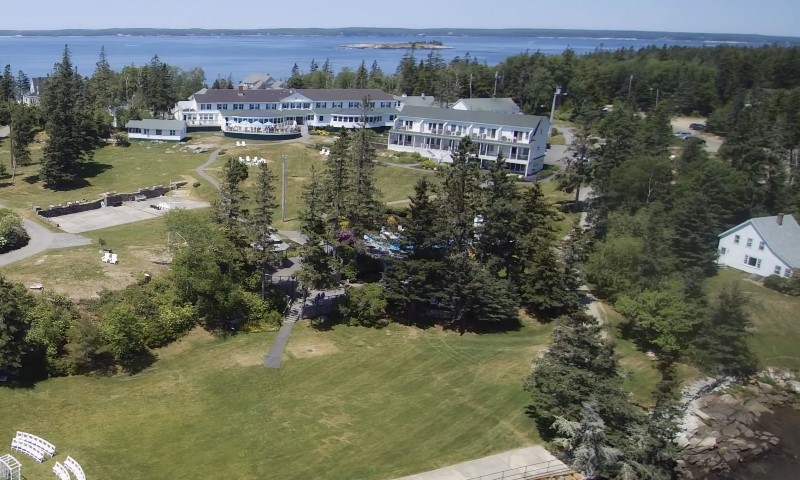
Located in Kennebunk, Maine, the Seaside Inn traces its hospitality history to the 17th century, when travelers crossing the Kennebunk River needed transportation and accommodations.
Historical accounts connect the property to lodging activities during the 1660s, with 1667 frequently cited as an early operating date.
Documented Gooch family ownership began in 1756, when Jedidiah Gooch acquired the property through a family connection.
Ownership initially passed through sons, but later transfers through daughters changed the family surname without ending its involvement.
Today, Trish Mason and her husband, Ken, operate the inn as ninth-generation innkeepers.
Nine Generations, Different Expectations
Trish grew up around the family business. When her parents approached retirement, she and Ken took responsibility for its operations, continuing a tradition that had lasted more than two centuries.
Today, the Seaside Inn operates as a 22-unit oceanfront property.
Maintaining an old building presents practical challenges, particularly along the Maine coast. Renovations, modern bathrooms, heating, reservations, and seasonal maintenance all require investment.
Guests may appreciate the property’s history, but its continued operation depends on meeting contemporary hospitality expectations.
Unlike businesses that expanded into entirely different industries, the Seaside Inn has kept much of its original purpose.
Its owners still provide accommodations, although almost everything involved in doing so has changed.
4. Lyman Orchards (1741) – The Family Farm That Learned to Change
John and Hope Lyman purchased 37 acres in Middlefield, Connecticut, in 1741, adding another 25 acres shortly afterward.
Nearly three centuries later, Lyman Orchards operates across approximately 1,100 acres, combining fruit production with retail, recreation, and seasonal attractions.
Members of the eighth and ninth generations continue participating in the business, including eighth-generation executive John Lyman III.
A Winter That Changed the Farm
In 1917, severe winter weather destroyed approximately 500 acres of peach trees, forcing the family to reconsider its agricultural operations.
Instead of restoring peach production on the same scale, the farm expanded into McIntosh and other apple varieties better suited to Connecticut’s climate.
Subsequent investments addressed additional commercial challenges.
In 1931, Lyman Orchards built cold-storage facilities capable of holding 40,000 bushels of apples. Controlled-atmosphere storage followed in 1963, allowing harvested fruit to retain its quality for longer periods.
Diversification continued in 1969 with an 18-hole golf course designed by Robert Trent Jones. In 1972, the company opened the Apple Barrel farm market, adding retail food sales and baked goods.
Each change introduced another source of income or reduced dependence on a particular crop.
How 1,100 Acres Became Several Businesses
Today, Lyman Orchards uses its land for agricultural production, recreation, and related commercial activities.
| Land use | Approximate acreage |
| Golf courses | 450 |
| Pick-your-own orchards | 350 |
| Original farm market and homestead area | 37 |
| Other land uses | 263 |
| Total | 1,100 |
Based on these reported figures, golf courses occupy approximately 41% of the property, while pick-your-own orchards account for around 32%.
Acreage alone cannot establish the revenue generated by each activity, but it demonstrates how substantially the business has diversified.
In March 2026, John Lyman discussed Connecticut’s agricultural investment tax-credit requirements with lawmakers, explaining that diversified farms could face eligibility problems when agricultural activities account for less than two-thirds of their business.
5. SC Johnson (1886) – The Family Business Hiding in the Cleaning Cupboard
View this post on Instagram
Samuel Curtis Johnson established his business in Racine, Wisconsin, in 1886 after purchasing a parquet flooring operation.
At 53, Johnson had already experienced several unsuccessful ventures. His new business initially concentrated on wooden flooring, but customers also needed products to maintain their purchases.
In 1888, the company introduced Prepared Wax, opening a market that would eventually become more important than flooring.
Over subsequent decades, SC Johnson expanded into household cleaning, air care, pest control, and related consumer products.
Today, its brands include Pledge, Glade, Raid, OFF!, and Scrubbing Bubbles.
Five Generations of Leadership
Family leadership continued through successive generations.
Herbert F. Johnson Sr. helped develop international operations, while Herbert F. Johnson Jr. advanced the company’s manufacturing and research capabilities.
Fourth-generation leader Sam Johnson oversaw further international expansion.
Fisk Johnson, the founder’s great-great-grandson, joined the company in 1987 and became chairman in 2000. He continues as chairman and CEO.
Despite operating internationally, SC Johnson is still privately held by the family. Family ownership now extends over a considerably larger operation than Samuel Curtis Johnson’s original flooring business. SC Johnson reports approximately 13,000 employees across more than 70 countries, yet control has stayed within the founding family.
Private ownership can allow longer investment periods without pressure to satisfy public shareholders every quarter. However, it also concentrates responsibility for decisions involving product safety, chemical ingredients, packaging, and environmental effects.
SC Johnson’s history offers a different example of family continuity. Unlike an inherited orchard or historic inn, the company developed into a multinational manufacturer while keeping leadership within the founding family.
What Actually Gets Passed Down?
Among America’s oldest family businesses, few have survived by operating exactly as their founders intended.
Zildjian adapted its products to changing musical preferences. Lyman Orchards introduced new crops and recreational activities, while SC Johnson developed household products that eventually replaced its original flooring business.
Shirley Plantation and the Seaside Inn followed different paths, preserving historic properties while adapting their present-day operations.
Family ownership provided continuity, but it did not eliminate economic pressures, difficult decisions, or historical responsibilities.
Perhaps the most important inheritance was not a particular product, building, or piece of land. It was the ability to recognize which parts of the business were worth keeping and which needed to change.