
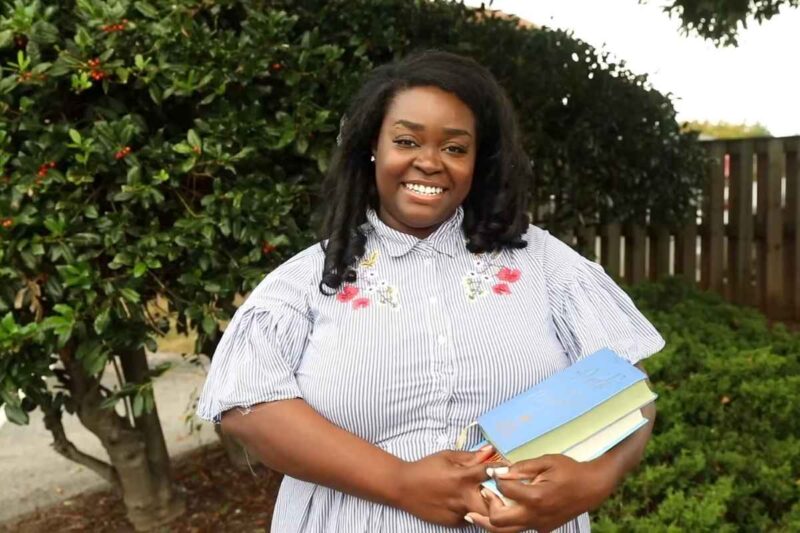
Araba Maze wasn’t planning to start a mobile library. She was simply reading children’s books to her nieces on the front stoop of her Baltimore home when a few neighborhood kids decided to join the audience.
One story turned into another. More children gathered, and nobody seemed particularly interested in ending storytime.
When Maze encouraged them to continue reading at home, however, she got an answer she hadn’t expected.
“We don’t have any books at home,” the children told her.
Here were kids practically begging for another story, yet they didn’t have books of their own.
Maze couldn’t stop thinking about that conversation. Eventually, it would inspire an unusual solution involving free books, neighborhood visits, and a green-and-gold trolley that looks like it belongs in a children’s movie.
How Can a Neighborhood Have a Library but Still Lack Books?
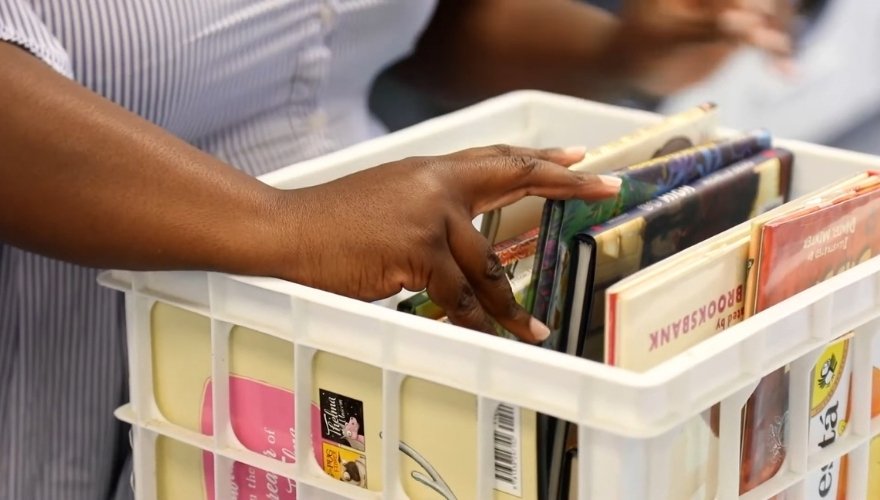
Maze had encountered something researchers call a book desert, a community where children have limited access to books and reading materials. Having a public library nearby doesn’t automatically solve that problem.
Parents working long hours may struggle to arrange visits. Transportation can be difficult, and library registration requirements can create additional obstacles for families.
Maze discovered another clue after becoming a librarian. Children visiting her library weren’t necessarily the same children eagerly attending storytimes outside her home.
Something wasn’t connecting.
A 2016 study published in Urban Education examined children’s access to books across six urban neighborhoods. Researchers Susan B. Neuman and Naomi Moland identified major differences between communities experiencing concentrated poverty and more affluent neighborhoods.
Access, rather than enthusiasm, was the problem Maze had witnessed firsthand.
Kids couldn’t develop home libraries if getting a book required transportation, paperwork, or a trip their parents couldn’t manage.
Becoming Baltimore’s Radical Street Librarian
Maze decided to change how books reached children.
Beginning her community literacy efforts in 2021, she developed Storybook Maze and eventually left her full-time librarian position to concentrate on bringing reading materials directly into underserved neighborhoods.
She adopted an entertaining job title along the way: radical street librarian.
Early efforts were wonderfully straightforward. Maze distributed books using the trunk of her car, organized free pop-up bookstores, hosted public storytimes, and installed book vending machines.
Instead of expecting families to rearrange their schedules around library visits, she brought books into places they already frequented.
Her approach also removed an important obstacle. Children could keep their selections without worrying about returning them.
Still, Maze had an even bigger idea. What if getting a free book could become an event children actually looked forward to?
A Green-and-Gold Trolley Became Her Library on Wheels
View this post on Instagram
An ordinary bookmobile might have worked, but Maze wanted something with considerably more personality.
In 2024, she began developing a trolley that could carry books and create the atmosphere of a miniature storybook adventure.
Her green-and-gold vehicle made its public debut with a Polar Express-inspired holiday experience in December 2025, followed by a broader rollout during summer 2026.
Unlike a traditional trolley, it doesn’t travel on rails. Instead, it brings free books to Baltimore parks, football practices, neighborhood streets, festivals, and community gatherings.
Kids can climb aboard, browse the shelves, participate in storytimes, and leave with books they get to keep.
Forget overdue notices. Nobody needs to remember a return date.
By October 2026, Maze reported attracting approximately 50 to 130 visitors on some operating days.
Those figures describe attendance, not necessarily the number of books distributed, but they offer a useful glimpse into the demand.
Getting the vehicle running wasn’t entirely smooth. An accident temporarily took it out of service, although Maze continued distributing books while the trolley was unavailable.
Apparently, even a traveling library can encounter a few unexpected plot twists.
Reading Becomes an Adventure When Kids Recognize Their Own Stories
Putting books on wheels solves one problem. Getting children excited about opening them presents another.
Maze approaches both challenges with considerable thought. She selects books that represent the communities she visits, paying attention to characters’ cultures, languages, holidays, and everyday experiences.
For a child who rarely encounters a familiar family or neighborhood in a story, finding one can make a book feel considerably more inviting.
Her approach also accounts for children who associate reading with difficult school assignments.
During a December 2025 visit to Walter P. Carter Elementary/Middle School, Maze used her Polar Express-themed trolley to introduce students to reading through an imaginative holiday activity.
Students weren’t simply handed reading assignments. They entered a decorated vehicle designed to make storytelling an experience.
“If you present it in a fun way, they will read,” Maze explained during her October 6, 2026, presentation at Elon University.
Interest has also expanded to older readers, encouraging Maze to include graphic novels, horror, and other genres requested by teenagers and adults.
Apparently, free books have an audience considerably older than the average elementary schooler.
A Baltimore Stoop Inspired Something Much Bigger
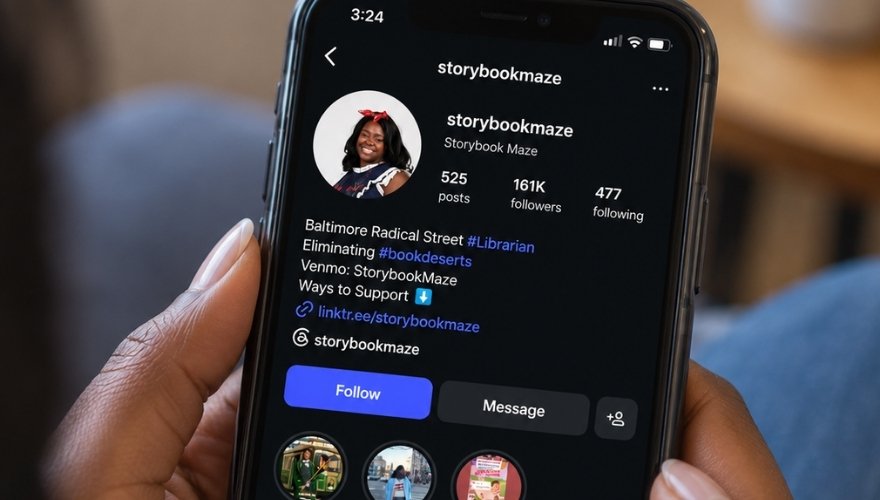
By October 2026, Storybook Maze had attracted more than 400,000 followers across TikTok and Instagram, according to Maze’s account of her social media audience.
That online attention has helped generate revenue and attract support for her literacy activities.
Still, operating a traveling library requires money, donated books, vehicle maintenance, and continued community involvement.
Maze has plans for additional book vending machines, potential new vehicles, and more seasonal events, including another Polar Express-inspired experience.
She’s also developing a toolkit to help librarians and community members establish similar initiatives elsewhere.
Her ambitions aren’t limited to getting one trolley around Baltimore.
During her October 2026 appearance at Elon University, she encouraged others to consider how creative neighborhood outreach might reach people overlooked by conventional library programs.
Sometimes the Best Library Is One That Comes Looking for Readers
A few years ago, children gathered around Maze’s Baltimore stoop because they wanted another story.
They didn’t need convincing that books could be entertaining. They needed somewhere to find them.
Today, a green-and-gold trolley carries that same idea through Baltimore, giving children the opportunity to choose stories and take them home.
Maze hasn’t solved every obstacle separating families and books. Her project still depends on donations, resources, and people willing to help.
But she’s demonstrated something rather lovely.
Sometimes, getting children interested in reading starts with showing up outside their homes with a trolley full of books.
Stories of people making a difference at any stage of life show how one person’s determination can inspire others, much like Joyce DeFauw’s journey back to college.