

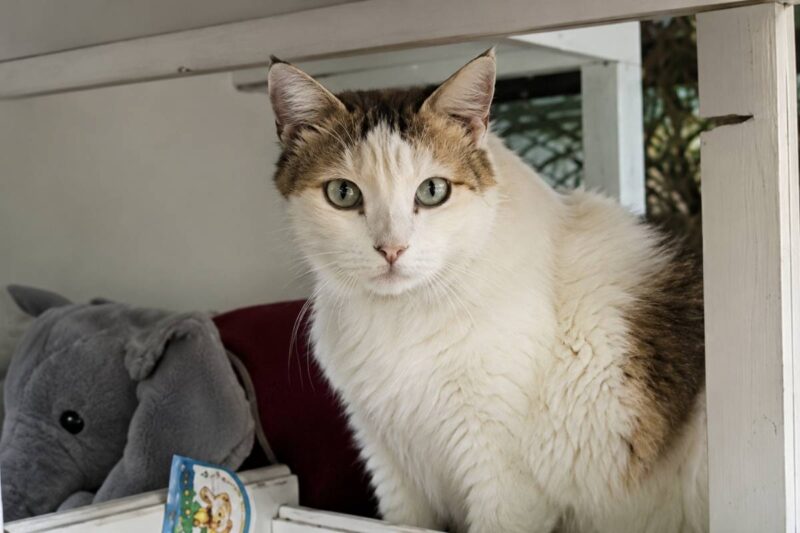
Every August, Jake Perry had another birthday to celebrate in his Austin, Texas, home. One particular guest of honor kept turning up for nearly four decades.
Her name was Creme Puff, a mixed tabby cat born on August 3, 1967. She lived until August 6, 2005, reaching an extraordinary 38 years and three days.
That made her the oldest cat ever recorded by Guinness World Records, a title she still holds.
Yet the most curious part of her story concerns her owner. Perry, an Austin plumber with an extraordinary affection for cats, had already raised another feline longevity record holder.
Two cats. One household. More than 70 years of combined life.
Perry believed he knew what kept his animals alive so long. His explanations involved home-cooked breakfasts, affection, entertainment, and, somewhat alarmingly, coffee and red wine.
Creme Puff’s 38 Years Made Her the Oldest Cat Ever Recorded
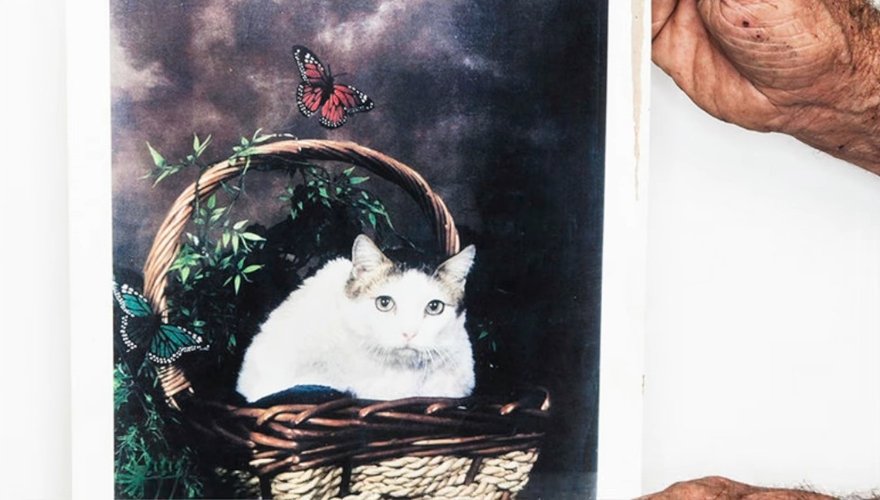
Creme Puff was already an elderly cat when many of today’s familiar household technologies were barely imaginable.
Born during Lyndon B. Johnson’s presidency, she lived through the moon landing, the arrival of personal computers, the rise of the internet, and the beginning of the 21st century.
By her 30th birthday in 1997, she had already exceeded an age that most domestic cats never approach.
Her lifespan is documented in the official Guinness World Records entry, which identifies Perry as her owner and confirms her birth and death dates.
Such verification matters. Extraordinary animal ages are sometimes reported using estimated birth dates, memories of former owners, or incomplete records. Creme Puff’s recognized record carries considerably more weight than an unusually old cat mentioned in a neighborhood newspaper.
For perspective, cats commonly live around 12 to 14 years, although plenty reach their late teens and some survive into their twenties.
Cornell University’s College of Veterinary Medicine notes that improved nutrition, indoor living, and veterinary advances have made cats in their twenties less unusual than they once were.
Even against that encouraging backdrop, Creme Puff’s age was exceptional.
At 38, she had lived more than three times as long as a cat reaching 12.
One distinction is worth keeping clear. Guinness maintains separate categories for the oldest cat ever recorded and the oldest living cat. Living-cat titles change as new animals qualify, while Creme Puff’s historical achievement requires another cat to exceed her documented age.
Perry, however, was familiar with record-breaking cats long before Creme Puff received her recognition.
View this post on Instagram
Jake Perry Had Already Raised Another Record-Breaking Cat
Years earlier, another resident of Perry’s home had attracted considerable attention.
Granpa Rexs Allen, also commonly called Grandpa Rex Allen, was a cat with Sphynx and Devon Rex ancestry who lived to approximately 34 years old.
His record was recognized in 1998, making him the previous Guinness longevity champion before Creme Puff surpassed him.
Having one cat reach 30 would be remarkable. Having two exceed that milestone under the same owner’s care naturally raises questions.
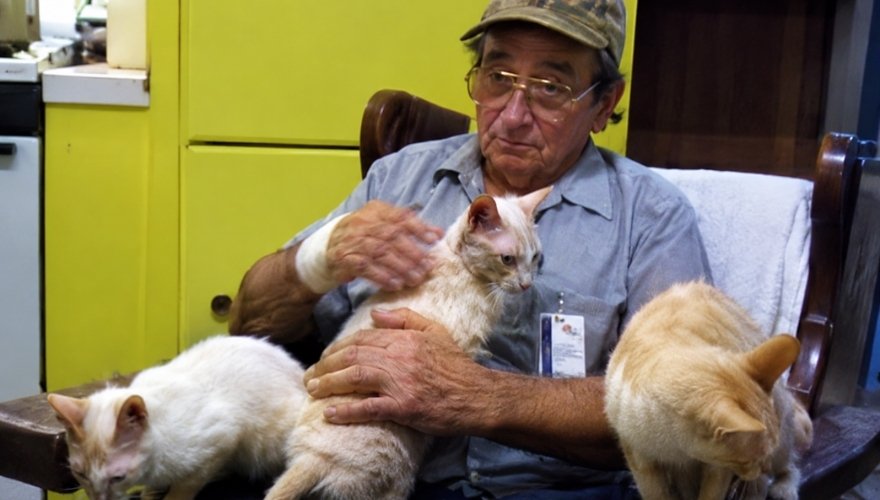
Perry wasn’t a veterinarian, animal nutrition researcher, or professional breeder searching for a scientific breakthrough. He was a plumber, husband, father, and extraordinarily enthusiastic cat owner.
Beginning in the 1980s, he adopted and rehomed hundreds of cats. At one point, his household reportedly accommodated as many as four dozen.
His involvement went considerably further than providing food and somewhere comfortable to sleep.
Perry entered cats in shows, arranged elaborate birthday celebrations, adapted his home to accommodate their activities, and maintained relationships with local veterinary professionals.
He also claimed that approximately one-third of his cats had lived to at least 30.
That assertion, however, deserves caution.
Although Creme Puff and Grandpa held recognized records, the ages of many other cats in Perry’s care couldn’t be independently established. Older adopted animals frequently arrive without complete documentation, making precise age verification difficult.
Still, his two famous cats presented an intriguing coincidence.
Perry had developed an elaborate routine that he believed supported their health, and he was more than willing to explain it.
Perry Believed an Entertaining Life Mattered, Too
Most cats are content to observe birds through a window. Perry decided his pets might appreciate a more cinematic experience.
He converted his garage into a miniature movie theater, complete with actual theater seating and a working projector.
Nature documentaries featured prominently in the programming.
His cats reportedly watched films in surroundings that would have looked familiar to anyone attending a small neighborhood cinema, apart, perhaps, from the audience’s grooming habits.
Perry also installed climbing structures and pathways around his home, giving his animals opportunities to move, investigate, and occupy themselves.
An enclosed outdoor area allowed them to observe their surroundings without wandering freely through the neighborhood.
If you’re curious about how cats navigate familiar and unfamiliar surroundings, read our article on whether cats can find their way home.
Such arrangements are easier to connect with established principles of feline welfare than his dietary experiments.
Cats benefit when their environment offers opportunities for climbing, hiding, playing, resting, and expressing natural behaviors. Appropriate enrichment can support physical activity and reduce boredom, although evidence doesn’t establish that watching documentaries extends feline lifespan.
Perry’s celebrations were equally elaborate.
He remembered his cats’ birthdays, arranged special occasions, and occasionally attracted considerable attention.
For Granpa’s 34th birthday, President Bill Clinton reportedly received an invitation and sent a response declining to attend.
One suspects the president had other obligations, although Granpa’s birthday was hardly an everyday event. Those arrangements reveal something important about Perry himself.
For all his eccentricity, he devoted remarkable amounts of time and attention to his animals. Their birthdays, activities, veterinary needs, and daily routines occupied a substantial portion of his life.
He believed affection and stimulation contributed to their longevity.
Neither offers a complete scientific explanation, but both provide a clearer picture of the environment in which Creme Puff spent her extraordinary life.
What Veterinarians Say About the Mystery of His Cats’ Longevity
Bruce Hardesty, a veterinarian associated with South Congress Veterinary Clinic in Austin, treated numerous cats belonging to Perry.
During reporting published in December 2015, Hardesty recalled caring for approximately 40 to 50 of Perry’s animals over 15 years.
He believed at least six had reached 30, with several others surviving to approximately 25.
Still, he acknowledged an important limitation. Precise ages weren’t always verifiable.
Even a veterinarian familiar with an animal’s medical history cannot necessarily establish its birth date without earlier documentation.
Another detail may offer a more scientifically credible explanation for part of Perry’s success. His cats were reportedly spayed or neutered.
Sterilization can reduce certain reproductive health risks and behaviors associated with roaming. Cats less inclined to wander may encounter fewer traffic hazards, fights, and infectious disease exposures.
Veterinarian Sandi Lefebvre, who worked with the American Veterinary Medical Association, identified such benefits when discussing Perry’s animals.
Yet sterilization alone cannot explain an individual cat reaching 38.
By the time Granpa and Creme Puff became famous, neutering was already a common practice among American cat owners. Most sterilized cats never approach their ages.
Several factors could have contributed to their exceptional survival.
Genetics may have influenced their resistance to certain diseases. Safe living conditions could have limited their exposure to accidents and infections. Regular veterinary attention may have helped identify health problems before they became life-threatening.
Sex may have played a modest role, too. A 2024 study of British cats found that females had an average life expectancy of 12.51 years, compared with 11.18 years for males.
Creme Puff was female, but an advantage of roughly a year hardly accounts for a cat surviving into her late thirties. Whatever helped her reach that age, ordinary differences in feline longevity offer only part of the explanation.
Creme Puff’s Record Remains an Extraordinary Benchmark
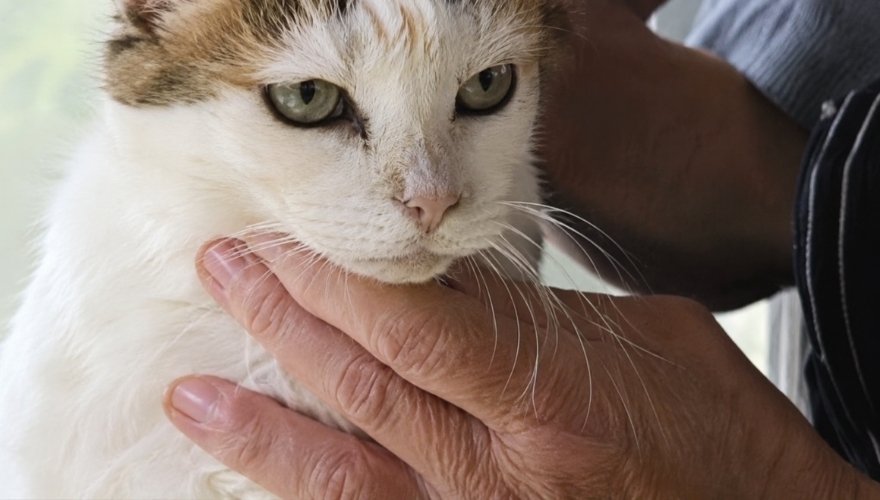
Creme Puff died on August 6, 2005, just three days after her 38th birthday.
More than two decades later, Guinness continues to list her as the oldest cat ever recorded.
Other cats have approached ages that would once have seemed almost unimaginable.
Flossie, a British cat whose age was officially recognized in November 2022, became the world’s oldest living cat at nearly 27.
Her recognition offered another useful perspective on feline longevity.
A 27-year-old cat has already survived considerably longer than most household pets. Yet Creme Puff lived another 11 years past that milestone.
That difference is enormous in an animal whose health can change significantly with each additional year of advanced age.
Documented records also deserve greater weight than unsupported claims of animals reaching 35, 40, or even more years.
Without reliable birth dates and supporting evidence, extraordinary stories are difficult to distinguish from errors in age estimates.
Two Remarkable Cats, and No Simple Explanation
Jake Perry’s cats left an unusual record in the history of domestic animals.
Grandpa Rex Allen reached approximately 34. Creme Puff lived to 38 years and three days. Both spent their lives under the care of a man who treated feline birthdays as occasions worth remembering.
His methods included practices veterinarians would discourage, alongside others that align with sensible animal care.
Separating those details matters. Coffee and wine aren’t longevity treatments, and affection alone cannot guarantee an exceptionally long life.
Perry’s devotion, however, was unmistakable.
He prepared meals, arranged veterinary visits, celebrated birthdays, and even provided a theater for an audience that probably had little interest in film criticism.
For nearly four decades, Creme Puff was part of those daily arrangements.
Long before she became a world record holder, she was simply a cat whose owner knew when her birthday was coming.