
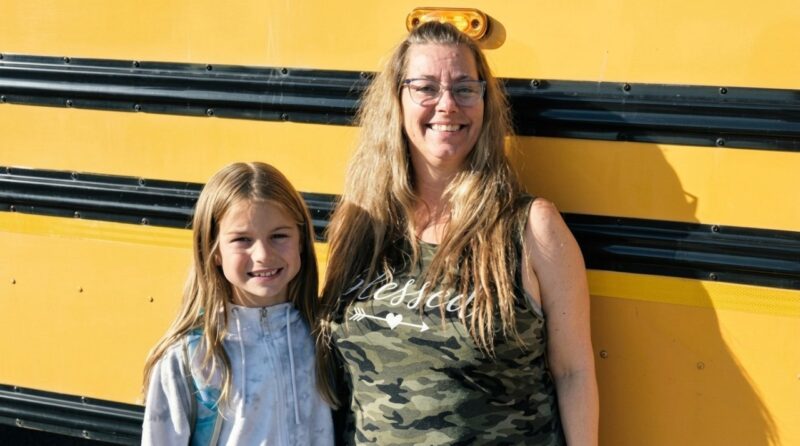
Most fifth graders have enough to think about on their ride home without worrying about the person behind the steering wheel. For Bella Scott, a student at Viola Gibson Elementary School in Cedar Rapids, Iowa, an ordinary afternoon on September 29, 2026, turned into something much more serious.
Bella noticed her school bus driver, Christine Huston, coughing uncontrollably and struggling to catch her breath. Something was clearly wrong, and the situation was getting worse with every passing minute.
Instead of sitting quietly and hoping another adult would notice, Bella pulled out her phone and called her father, Nick Scott. She eventually reached him, and he hurried to the bus to help.
What followed involved three phone calls, a golf cart, approximately 20 children, and a bus driver who was still determined to finish her route despite barely being able to breathe.
By the time emergency responders arrived, Bella’s quick thinking had helped get Huston the medical attention she urgently needed.
A School Bus Driver Tries to Finish Her Route Despite Trouble Breathing
September 29 began as a typical school day in Cedar Rapids. Students at Viola Gibson Elementary School were heading home, and Christine Huston was doing the job she knew well, transporting children along her regular afternoon route.
Trouble started when Huston noticed a strong smell of cologne on the bus. According to her account, the odor triggered a coughing spell that gradually became more severe.
Huston tried to get some fresh air, even sticking her head out the driver’s window in hopes of breathing more comfortably. Nothing seemed to help.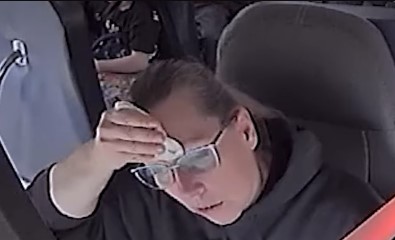
Still, she continued driving for another two or three stops, hoping the discomfort would pass.
Anyone familiar with school transportation can appreciate the predicament. A driver has children waiting to get home, a route to complete, and a responsibility to keep everyone safe. Stopping unexpectedly creates another set of problems.
But Huston’s condition was becoming a medical emergency.
According to the Cedar Rapids Community School District’s official account of the September 29 incident, Huston was experiencing a severe asthma attack that left her struggling to breathe and speak.
For Huston, continuing to operate a school bus was no longer a safe option.
Fortunately, one of her young passengers had already noticed.
Bella Scott Recognizes the Emergency and Calls Her Father
Bella Scott was watching and listening as Huston’s coughing grew worse.
Other students might have assumed their driver had a temporary coughing spell. Bella recognized that Huston was having serious trouble getting enough air.
“She was coughing a lot. She was wheezing. She was struggling to breathe, and obviously she needed help,” Bella explained afterward.
Her conclusion was simple.
“You can’t just watch something like that happen.”
Bella decided to contact someone she trusted. She reached for her phone and called her father, Nick Scott, who was nearby.
Getting his attention proved harder than expected.
Nick initially believed his daughter was calling to ask for additional time on her phone, a request familiar enough to many parents that he did not immediately suspect an emergency.
Bella kept calling.
By her third attempt, Nick could hear something different in his daughter’s voice. Her fear made it clear that she was not calling about an ordinary after-school concern.
At that point, Nick realized he needed to get to her immediately.
Bella had also managed to communicate the bus’s location, giving her father the information he needed to find it.
Her actions were straightforward, but each part mattered. She recognized the danger, contacted an adult, explained the situation, and continued trying until help was on its way.
Three Phone Calls and a Golf Cart Bring Help to the Bus
Nick Scott had been working in his backyard, cleaning up after flooding that had affected the property during the previous week.
His afternoon plans changed considerably once he realized Bella was frightened and needed help.
A golf cart happened to be nearby, and Nick decided it was the quickest practical way to reach the bus.
He considered taking his truck but figured the smaller vehicle would be easier to maneuver through the neighborhood, especially with children outside after school.
It was not exactly the sort of emergency transportation anyone would plan in advance, but it was available, and Nick needed to move.
With Bella giving him directions, he headed toward the stopped school bus.
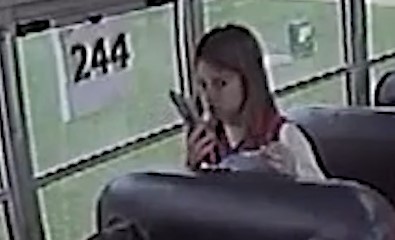
For Bella, seeing her father arrive brought immediate relief. She had recognized that an adult needed help, and now someone capable of taking charge was there.
Nick had little trouble seeing why his daughter had been so concerned.
Huston was in considerable distress, struggling to breathe and barely able to speak.
What had started as an ordinary afternoon of yard cleanup had become a medical emergency involving a school bus full of children.
Nick Boards the Bus and Makes the Call to 911
Once Nick boarded the bus, he quickly assessed the situation.
Huston was experiencing serious breathing problems, but she was still thinking about her passengers. She wanted to continue driving and finish getting the students home.
Nick understood her reasoning. He also recognized that continuing the route could endanger everyone aboard.
Approximately 20 children were still on the bus, according to his account.
Allowing a driver who could barely breathe to operate a large vehicle was simply too risky.
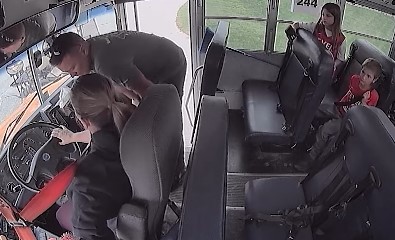
Nick told Huston they were calling 911, regardless of her determination to finish the route.
His insistence may have been exactly what she needed.
Nick later recalled noticing relief on Huston’s face once the decision had been made.
For someone accustomed to being responsible for other people’s children, accepting assistance can be difficult. Huston was focused on completing her duties, even when her own health demanded attention.
Calling emergency responders was the safest decision.
Medical guidance supports that response. According to the Centers for Disease Control and Prevention’s asthma action plan, serious difficulty speaking or walking because of shortness of breath is a warning sign requiring immediate emergency care.
Such symptoms should not be dismissed simply because a person wants to continue working or believes the problem will eventually pass.
In Huston’s case, Nick recognized that getting professional assistance mattered more than finishing the afternoon schedule.
Keeping the Other Students Calm While Emergency Help Arrives
Calling 911 addressed Huston’s immediate medical needs, but another problem needed attention.
Nearly 20 children were still aboard the bus, and several were becoming frightened.
Some were crying. Others were panicking as they watched their driver struggle and waited for emergency responders.
Nick understood that the students needed reassurance, but he also knew that simply telling frightened children to calm down might not accomplish much.
Instead, he gave them something practical to do.
He helped students contact their parents and guardians, allowing them to explain what was happening and let their families know they were safe.
Giving the children a task helped redirect their attention and offered them some control over an upsetting situation.
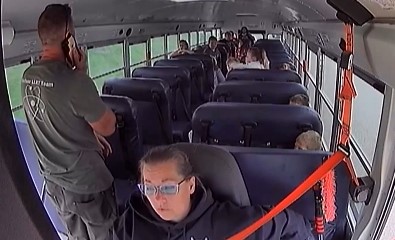
It was a small but useful decision.
A medical emergency on a school bus creates two separate responsibilities. Someone must obtain assistance for the person in distress, while another adult needs to account for the children and ensure they are supervised.
Nick helped with both.
Emergency responders arrived within minutes of the call and provided care to Huston.
Another school bus was arranged to take the students home, allowing the regular transportation schedule to continue without asking Huston to put herself or her passengers at additional risk.
Nobody had planned for an afternoon involving emergency responders, worried parents, and an unexpected bus transfer. Fortunately, the necessary arrangements were made.
Bella Followed a Safety Lesson That Actually Worked
Bella’s actions were not entirely spontaneous. Her school bus safety training had prepared her to respond when something went wrong.
Huston later explained that students had been taught to contact a trusted adult during an emergency.
Bella remembered that instruction and acted on it.
She also knew that using her phone was permitted in such circumstances. Huston had made it clear to students on her route that phones could be used when emergencies occurred.
Such rules have a practical purpose. Children may notice trouble before another adult is available, particularly on a bus where the driver is the only adult present.
Bella did not attempt to diagnose Huston’s condition or provide medical treatment. She recognized that something was wrong and contacted someone who could arrange assistance.
An important detail is how she handled the initial communication problem.
Nick misunderstood the purpose of her first calls. Bella could have assumed he was unavailable or waited for someone else to act.
Instead, she tried again and made sure he knew the situation was serious.
Her persistence changed the outcome of those conversations.
Effective emergency communication often depends on three basic pieces of information: what is happening, where help is needed, and how urgently someone must respond.
Bella supplied those details well enough for her father to locate the bus and intervene.
Her response also points to an easily overlooked issue in school safety planning. Teaching children emergency procedures is important, but those procedures work best when children know they will be heard and taken seriously.
Bella trusted that her father would help once he realized what was happening.
He did.
Cedar Rapids School Officials Recognize Bella’s Courage
View this post on Instagram
Bella’s response did not go unnoticed by school officials.
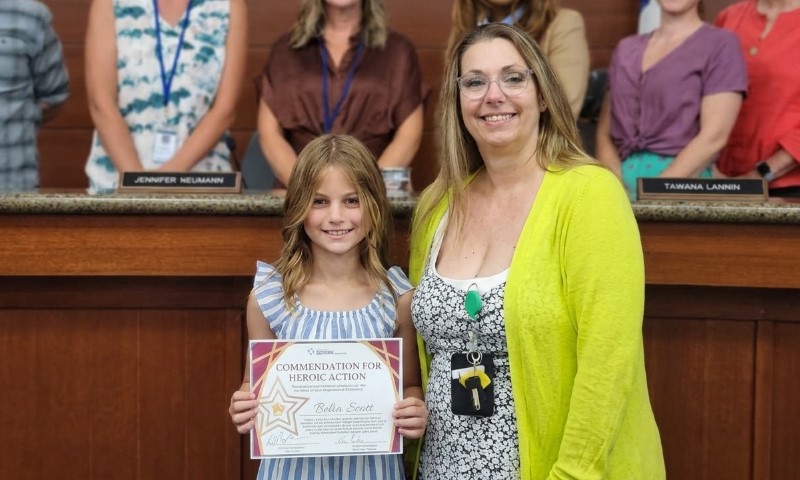
On October 14, 2026, the Cedar Rapids Community School District announced that its Board of Education was recognizing her with a Commendation for Heroic Action.
School officials praised her attentiveness, clear communication, persistence, and concern for her bus driver.
Bella had noticed an adult in danger, accurately described the problem, and helped secure emergency medical assistance without losing focus on what needed to happen next.
Her actions offered a particularly useful example of emergency preparedness in practice.
Many school safety lessons focus on following instructions, recognizing hazards, and knowing which adults to contact.
Bella demonstrated why those skills matter.
She was not required to operate unfamiliar emergency equipment or make medical decisions. She used resources already available to her, including her phone and her relationship with a trusted adult.
Recognition by the school board gave the community an opportunity to acknowledge something that could easily have ended much differently.
Still, the most important part of Bella’s achievement happened well before the commendation.
A frightened fifth grader had made sure someone listened.
A Simple Phone Call Made All the Difference
By the end of that September afternoon, emergency responders had assisted Christine Huston, another bus had taken the children home, and Bella Scott had given her family and school community an unexpected reason to celebrate.
Her father had played an essential role, recognizing the danger, calling 911, and helping frightened students reach their families.
Bella’s contribution came earlier, when she noticed that the situation was getting worse and decided to do something about it.
Most children will never face the same emergency on their school bus, and nobody would wish it on them.
But knowing how to recognize danger, contact a trusted adult, and explain a problem clearly is valuable preparation.
For Christine Huston, those skills made a remarkable difference.
An ordinary school day ended with a medical emergency, an improvised golf cart rescue, and a bus driver who discovered just how much one of her young passengers cared.
Sometimes the most important person in an emergency is simply the first one willing to speak up.